Dental implants have become the gold standard for replacing missing teeth, offering a permanent solution that looks, feels, and functions like natural teeth. For the millions of Canadians who are missing one or more teeth, implants can be life-changing — restoring the ability to eat comfortably, speak clearly, and smile with confidence. But they’re also a significant investment, and understanding the process, costs, and options is essential before making a decision. This comprehensive guide covers everything you need to know about dental implants in Canada.
What Are Dental Implants?
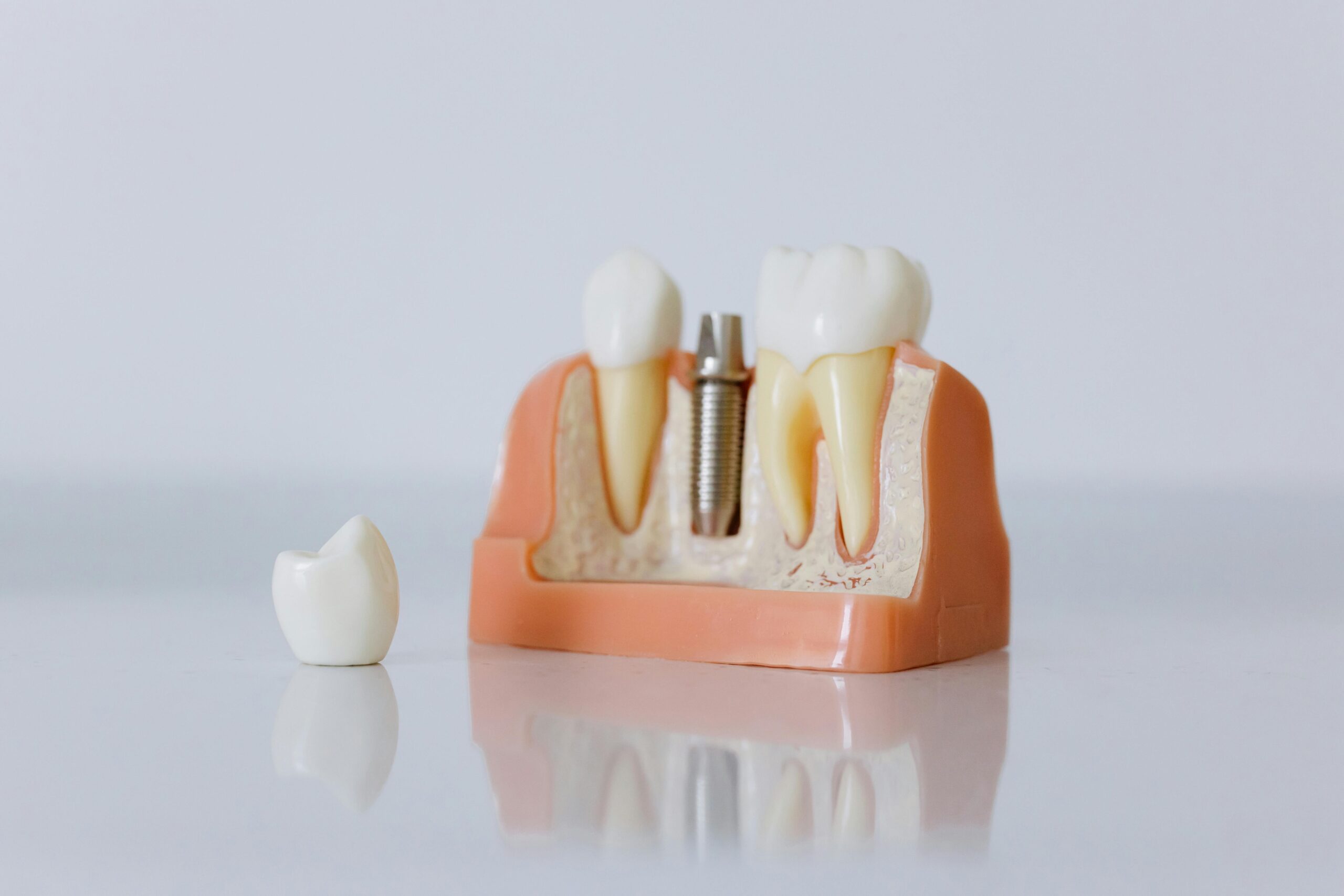
A dental implant is a small titanium post that is surgically placed into the jawbone, where it serves as an artificial root for a replacement tooth. Over a period of several months, the implant fuses with the bone through a process called osseointegration, creating an exceptionally strong and stable foundation. Once healed, an abutment (connector piece) is attached to the implant, and a custom-made crown is placed on top to match your natural teeth.
Unlike dentures, which sit on top of the gums and can slip or shift, implants are fixed in place and maintained just like natural teeth — with regular brushing, flossing, and dental checkups. Unlike dental bridges, implants don’t require the adjacent teeth to be filed down for support, which preserves more of your natural tooth structure.
Types of Dental Implants
There are several implant options depending on your situation. A single tooth implant replaces one missing tooth with one implant post and one crown. This is the most straightforward type and is ideal when the surrounding teeth are healthy.
An implant-supported bridge can replace several missing teeth in a row using two or more implants to support a bridge of connected crowns. This is more cost-effective than placing individual implants for each missing tooth.
All-on-4 (or All-on-6) implants are full-arch solutions where an entire set of upper or lower teeth is supported by four to six strategically placed implants. This option is popular among patients who have lost most or all of their teeth and want a permanent alternative to traditional dentures.
Mini implants are smaller than standard implants and are sometimes used to stabilize lower dentures or in situations where there isn’t enough bone for a standard implant. They typically involve a less invasive procedure and a shorter healing time.
How Much Do Dental Implants Cost in Canada?
Dental implant costs in Canada vary widely based on the type of implant, the complexity of the case, the materials used, and where you live. Here’s a general breakdown of what you can expect to pay.
A single dental implant, including the surgical placement, abutment, and crown, typically costs between $3,000 and $6,000. Some clinics in major cities like Toronto and Vancouver may charge more, while prices in smaller cities and rural areas tend to be at the lower end of the range.
An implant-supported bridge to replace three to four teeth usually costs between $6,000 and $12,000, depending on the number of implants needed and the materials used for the bridge.
Full-arch All-on-4 treatment ranges from $20,000 to $30,000 per arch. While this is a substantial investment, it includes all the implants, temporary teeth worn during healing, and the final permanent prosthesis. Compared to the lifetime cost of maintaining and replacing traditional dentures, many patients find that All-on-4 is cost-competitive over the long term.
Additional procedures that may be needed before implant placement, such as bone grafting ($500 to $3,000) or a sinus lift ($1,500 to $3,000), will add to the total cost. Your implant specialist will discuss these possibilities during the consultation.
Are Dental Implants Covered by Insurance?
Most standard dental insurance plans in Canada provide limited coverage for implants, if any. Some plans classify implants as a major restorative procedure and cover 50% of the cost up to an annual maximum. It’s important to check your specific plan’s terms.
The Canadian Dental Care Plan (CDCP) does not currently cover dental implants in most cases, though it does cover some prosthodontic services. This may change as the program expands. If you’re eligible for the CDCP, it’s worth checking the current list of covered services or asking your dental provider.
Many dental offices offer financing options to help make implants more affordable, including interest-free payment plans spread over 12 to 24 months. Some clinics also work with third-party financing companies to offer extended payment options.
The Implant Process: What to Expect
Getting a dental implant is typically a multi-step process that takes place over several months. It begins with a comprehensive consultation where the dentist or oral surgeon examines your mouth, takes 3D scans or X-rays, and discusses your options. If you’re a good candidate, a treatment plan is created.
The surgical placement of the implant is usually done under local anesthesia, though sedation options are available for anxious patients. The procedure itself typically takes one to two hours per implant. After placement, a healing period of three to six months is needed for osseointegration — the process of the implant bonding with your jawbone.
Once the implant has fully integrated, the abutment is placed and impressions are taken for your custom crown. The final crown is then attached, completing the restoration. The result is a replacement tooth that is virtually indistinguishable from your natural teeth.
Finding an Implant Specialist in Canada
Dental implants are placed by several types of dental professionals in Canada, including oral and maxillofacial surgeons, periodontists, and general dentists with advanced training in implant dentistry. When choosing a provider, ask about their experience with implants, how many they’ve placed, and what type of implant system they use.
Use Smile Directory to find dental professionals across Canada who offer implant services. Our directory lets you search by city and specialty, making it easy to compare providers in your area. As a non-profit organization, Smile Directory is committed to helping Canadians access the dental care they need.
Is a Dental Implant Right for You?
Dental implants are suitable for most adults who are missing one or more teeth and have adequate jawbone density. Good candidates are in overall good health, don’t smoke (or are willing to quit, as smoking significantly increases the risk of implant failure), and are committed to maintaining good oral hygiene.
If you’ve been told in the past that you don’t have enough bone for implants, it’s worth getting a second opinion. Advances in bone grafting techniques and the development of shorter and narrower implant designs have made implants possible for many patients who would have been turned away even a few years ago.
The best first step is to schedule a consultation with an implant specialist who can evaluate your specific situation and discuss all of your options for replacing missing teeth.